Introduction
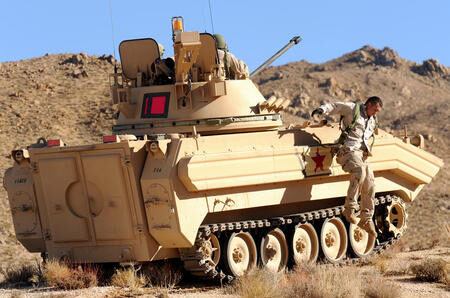
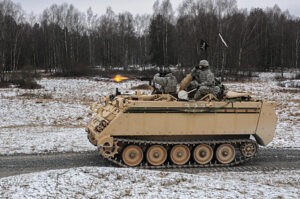
The M113 armored personnel carrier was developed by the FMC (Food Machinery Corp.) based on M59 and M75 armored personnel carriers from the 1950s. The first prototype of M113 was produced in 1957. The US Army adopted the vehicle in 1960. Kaiser Aluminum and Chemical produced the aluminum required for the development of M113.
The M113 armoured personnel carrier was developed by the FMC (Food Machinery Corp.) based on M59 and M75 armoured personnel carriers from the 1950s. The first prototype of M113 was produced in 1957. The US Army adopted the vehicle in 1960. Kaiser Aluminum and Chemical produced the aluminium required for the development of M113.
FMC transferred the production of M113 vehicles to its new subsidiary, the United Defense in 1994. United Defense was acquired by BAE Systems in 2005.
More than 80,000 M113 vehicles were produced in different variants. The vehicle is operational in more than 44 countries. The majority of the M113 vehicles used by the US Army have been upgraded to the M113A3 variant. In 2020, BAE Systems completed the production of the first armored multi-purpose vehicle (AMPV) that will replace the M113 armored personnel carriers in service since the 1960s. In 2018, the company received a low-rate initial contract to deliver up to 450 AMPVs to the US Army. The M113s serving the US Army are expected to remain in service until 2030.
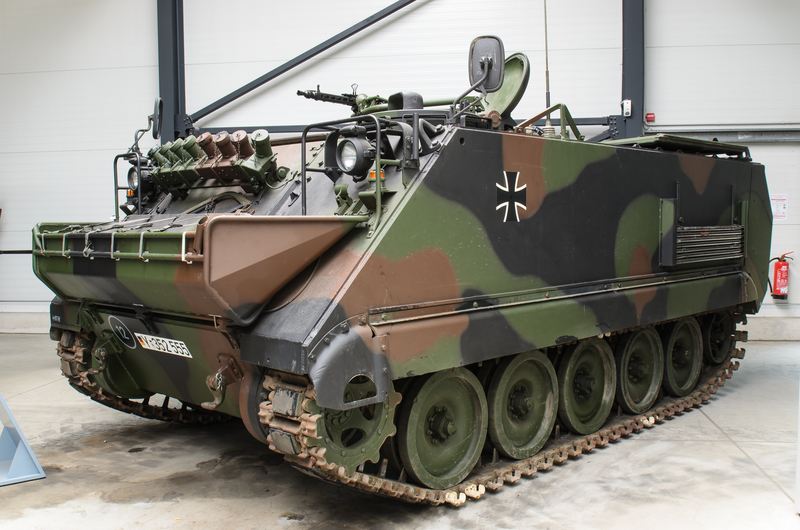
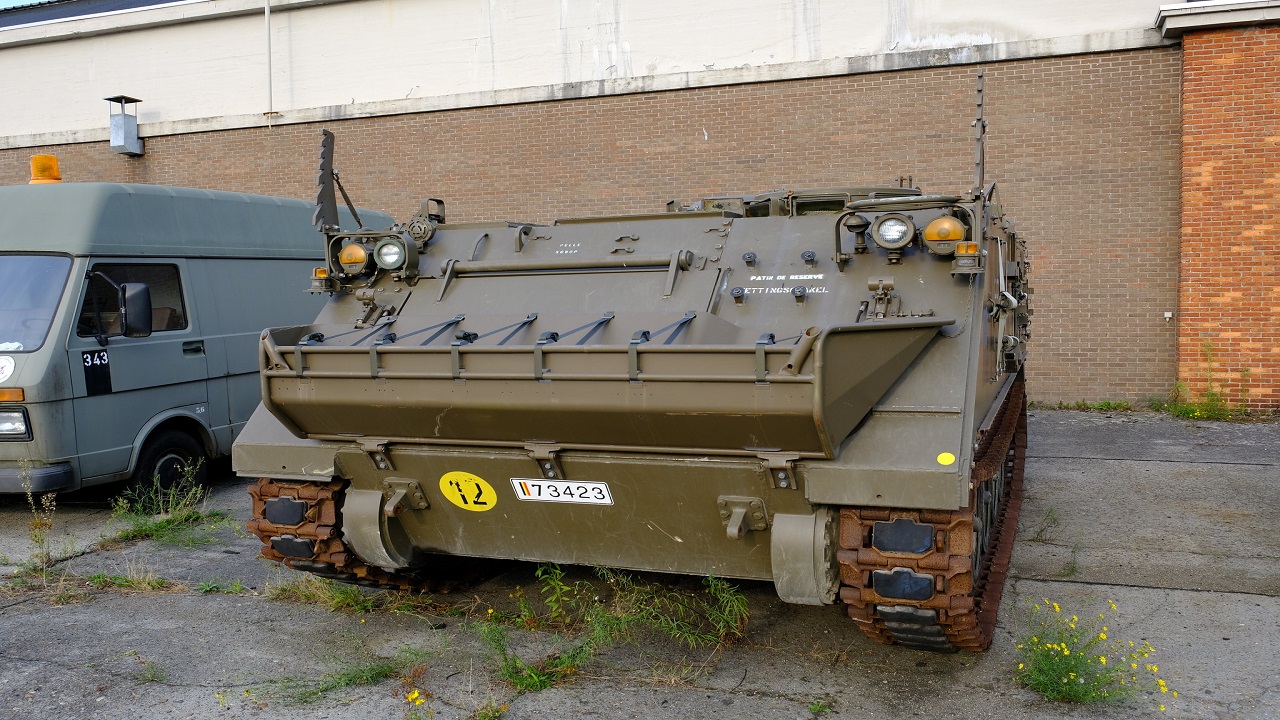
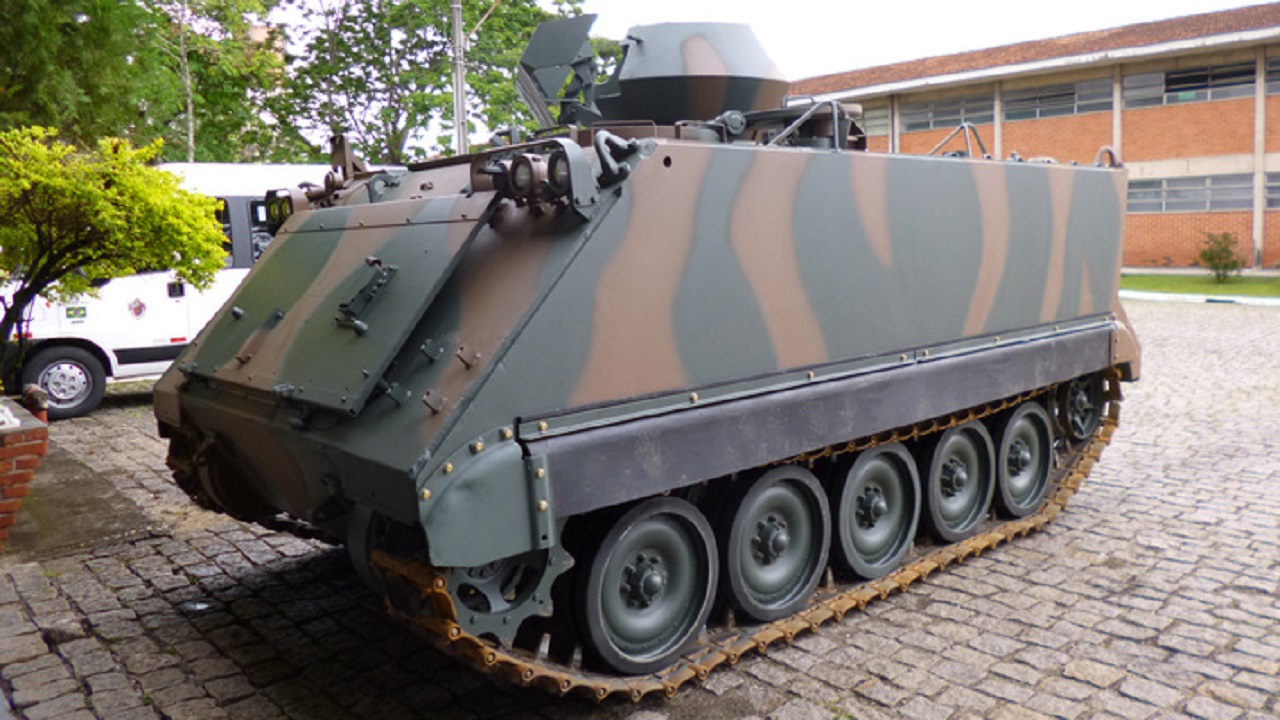
Design of the M113 armored personnel carrier
The M113 armored personnel carrier was designed by FMC. The main design features of the vehicle include fully enclosed armor made with 5083 aircraft-quality aluminum alloy. Most of the components of the vehicle are made of light alloys. The vehicle is designed to provide safety from small firearms to big artillery shell splinters. The 12.3t vehicle has a length of 4,863m, width of 2,686m, and height of 2.5m. It can accommodate two crew members and 11 passengers.
Variations of M113 APC
The vehicle has more than 40 variants. The basic variants include the M113A1, M113A2, M113A3 and M113 ACAV. M113A1 was introduced in 1964. It has a 215 hp (160 kW) diesel engine equipped with M106 mortar carrier.
M113A2 was produced in 1979. It features cooling and suspension improvements. M113A3 was introduced in 1987. It features battlefield survival enhancements, a more powerful engine, external fuel tank and better protection than the basic model. The A3 fleet will feature vehicles with high-speed digital networks and data transfer systems under a digitization programme that seeks to integrate appliqué hardware, software, and installation kits in the M113A3s.
M113 armored cavalry assault vehicle (ACAV) variant was introduced during the Vietnam War in 1966. It is equipped with additional 7.62mm M60 machine guns apart from the M2 .50 cal. machine gun. It is also fitted with additional armor, such as a mine protective kit under the hull.
Orders and deliveries of M113 armored personnel carrier
The Brazilian army signed a contract with BAE Systems to upgrade their 150 M113Bs to the M113A2 Mk1 configuration, in December 2011. The upgrade programme achieved a significant milestone with the completion of 100th vehicle conversion in December 2014.
In June 2011, the US Army awarded a $14.2m contract to provide 1,026 refurbished M113A2 vehicles to the Iraqi Army.
In October 2010, BAE systems was awarded with a $14m contract to provide T150F track systems for Australia’s M113 Vehicles.
The company completed the upgrade of 433 M113A1 vehicles of the Australian Army to the AS4 standards in 2012 to extend their service life beyond 2020. In February 2010, the US Army TACOM Life Cycle Management Command awarded a $32m contract to reset 417 M113 vehicles.
In December 2009, DEW Engineering and Development was awarded with a $29.4m contract to provide maintenance and repair services for Canada’s M113 vehicles. BAE Systems appointed DEW as an exclusive representative to sell M113 products and services for Canada.
In June 2009, the US Army awarded contracts worth $124.8m for the upgrade and maintenance of M113 vehicles.
In February 2008, the US Army TACOM Life Cycle Management Command placed a $91.4m contract to reset 1,074 M113 vehicles.
In January 2007, BAE Systems was awarded a $29.7m contract for delivering 72 power pack kits and other upgrade kits for Norwegian M113 vehicles.
The Iraqi Army received 1,026 M113A2 armoured personnel carriers from the US Army’s surplus defence articles. Executed under the US foreign military sales programme, the deal supports Iraq’s planned six-division armoured capability.
Armaments and weaponry on M113 APC
The M113 is commonly fitted with a single .50 cal. M2 Browning machine gun as the main armament. The armoured vehicle can also be fitted with a 40mm Mk 19 automatic grenade
launcher, anti-tank weapons, 7.62mm M60 machine guns and cannon 20mm to 105mm high explosives. It can also be mounted with M47 Dragon missile system.
The M113A2 Mk1 configuration can be equipped with a range of combat arms for increased lethality and soldier survivability.
Engine and mobility
The M113 is equipped with a 6V53 Detroit two-stroke six-cylinder diesel engine with Allison TX100-1 three-speed automatic transmission.
The vehicle is capable of providing amphibious operation, on land and in water. The light weight of the vehicle makes it easy to transport the vehicle by a fixed rotary wing aircraft. The vehicle is propelled in water by its tracks. The speed of the vehicle is 67.6km/h on land and 5.8km/h in water.
Specification
General
| Length | 191.5″ |
| Width | 105.75″ |
| Height | 86.5″ |
| Clearance | 16″ |
| Weight, combat loaded | 27,180 lb. (12,329 kg) |
| Maximum weight | 31,000 lb. (14,061 kg) |
| Net weight | 23,880 lb. (10,832 kg) |
| Air drop weight | 22,128 lb. (10,037 kg) |
| Personnel capacity | 2 + 11 |
| Fuel tank capacity | 95 gallons (360 liters) |
| Ground pressure | 8.63 psi (0.60 kg/cm2) |
Performance
| Speed on land | 41 mi/h (66 km/h) |
| Speed in water, with track | 3.6 mi/h (5.8 km/h) |
| Cruising range | 300 mi (483 km) |
| Turning radius | Pivot to infinite |
| Slope | 60% |
| Side slope | 40% |
| Trench crossing | 66 in. (168 cm) |
| Vertical wall climbing | 24 in. (61 cm) |
| Braking (20-0 mi/h) | 40 ft. |
Engine
| Make and model | Detroit Diesel 6V53T |
| Displacement | 318 in.3 (5.2 liter) |
| Fuel | Diesel (DF2) |
| Rated horsepower | 275 hp |
| Gross horsepower-to-weight ratio | 20.2 hp/ton |
Transmission , Automatic
| Make and model | Allison X200-4B |
| Type | Hydrokinetic |
| Steering | Hydrostatic |
| Brake type | Multiple wet plate |
Running Gears
| Suspension | Torsion bar |
| Road wheels | 5 per side, 24 inch diameter (61 cm) |
| Track type | Steel single pin, detachable rubber pad |
| Number of shoes | 63 left, 64 right |
| Track pitch | 6 in. (15.2 cm) |
| Track width | 15 in. (38 cm) |
| Shock absorbers | 3 per side |
| Wheel travel | 9.0 in. (22.9 cm) |
Electrical System
| Generator | |
| Amperes | 200, 300 optional |
| Volts, dc | 28 |
| Batteries | 4, type 6TL, 120 amp-hr, 12-volt each |
Armament
| 50 cal MG | 2,000 ready rds. |
Armor
| Basic hull | 5083 Aluminum |
| Bolt-on armor kit | Steel armor |
| Mine armor | Steel armor |
| Gun shield kit | Steel armor |
| Spall suppressant | Composite panel |
Fire Extinguishers
| Fixed | 5 lb. (2.3 kg) CO2 for engine compartment |
| Portable | 5 lb. (2.3 kg) CO2 |